User Research · Product Thinking · Banking

A search problem that turned out to be a trust problem.

The Data & Analytics Marketplace started as “make data easy to find.” Research reframed it — people could find data, they just couldn't trust or act on it. Here's the thinking behind the product.

Role
Senior UI/UX DesignerResearch → strategy
Method
Interviews · RBAC3 user types
Domain
BankingData governance
Outcome
50% faster tasksRebuilt on trust
The objective

Test the brief before designing to it.

The ask was a search problem: if people could find data, they'd use it. So I interviewed all three user types who touch data — analysts, risk teams, and engineers — before designing anything.

Their journeys didn't match the assumption. What surfaced changed the definition of success for the whole product.
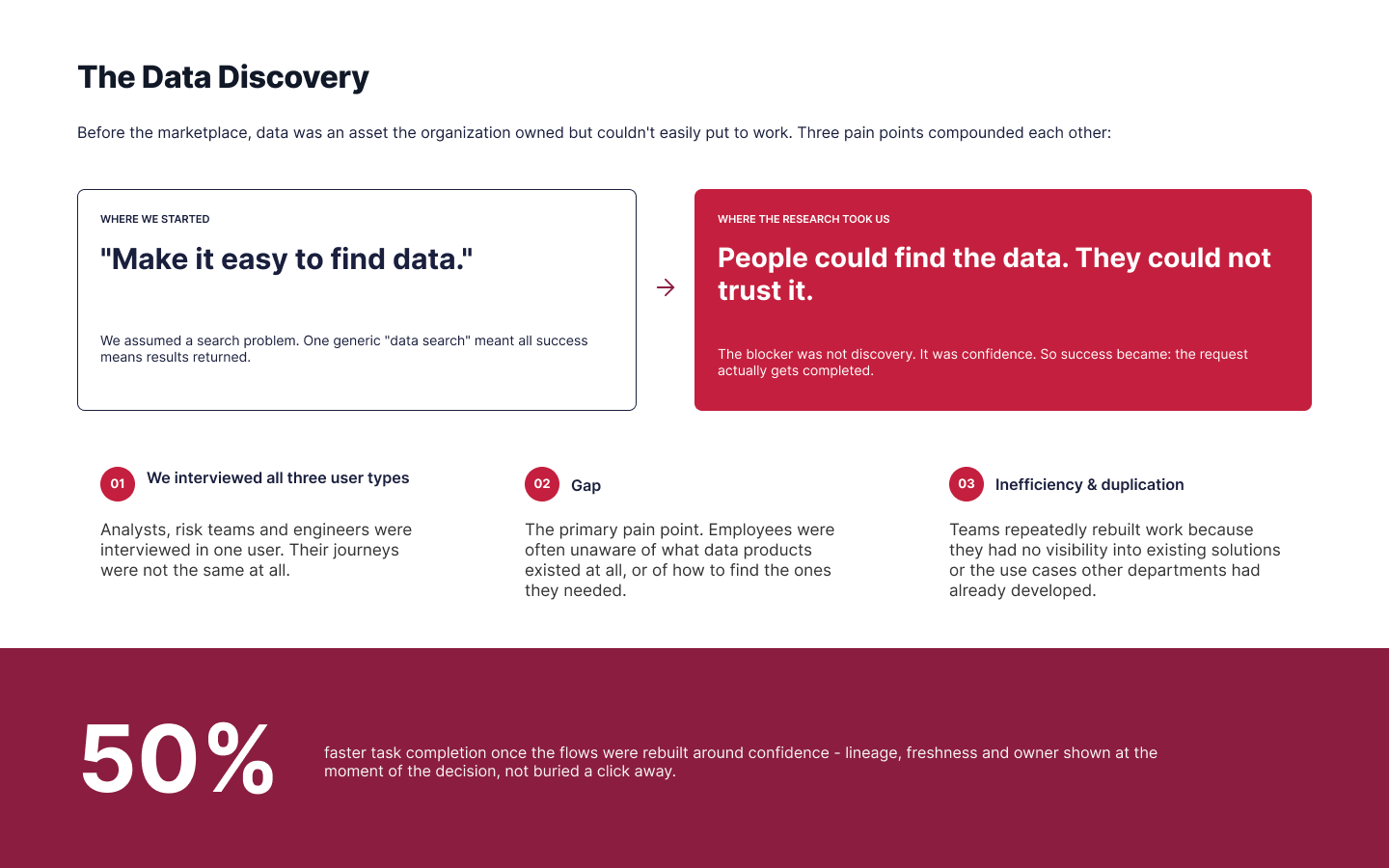
Where we started
“Make it easy to find data.”
→
Where research took us
People could find the data. They couldn't trust it.

Discovery wasn't the blocker. Confidence was.

Research reframe: the Data Discovery — a search problem became a trust problem, three interview findings, and a 50% faster task-completion result
The Data Discovery — research synthesis across three journeys

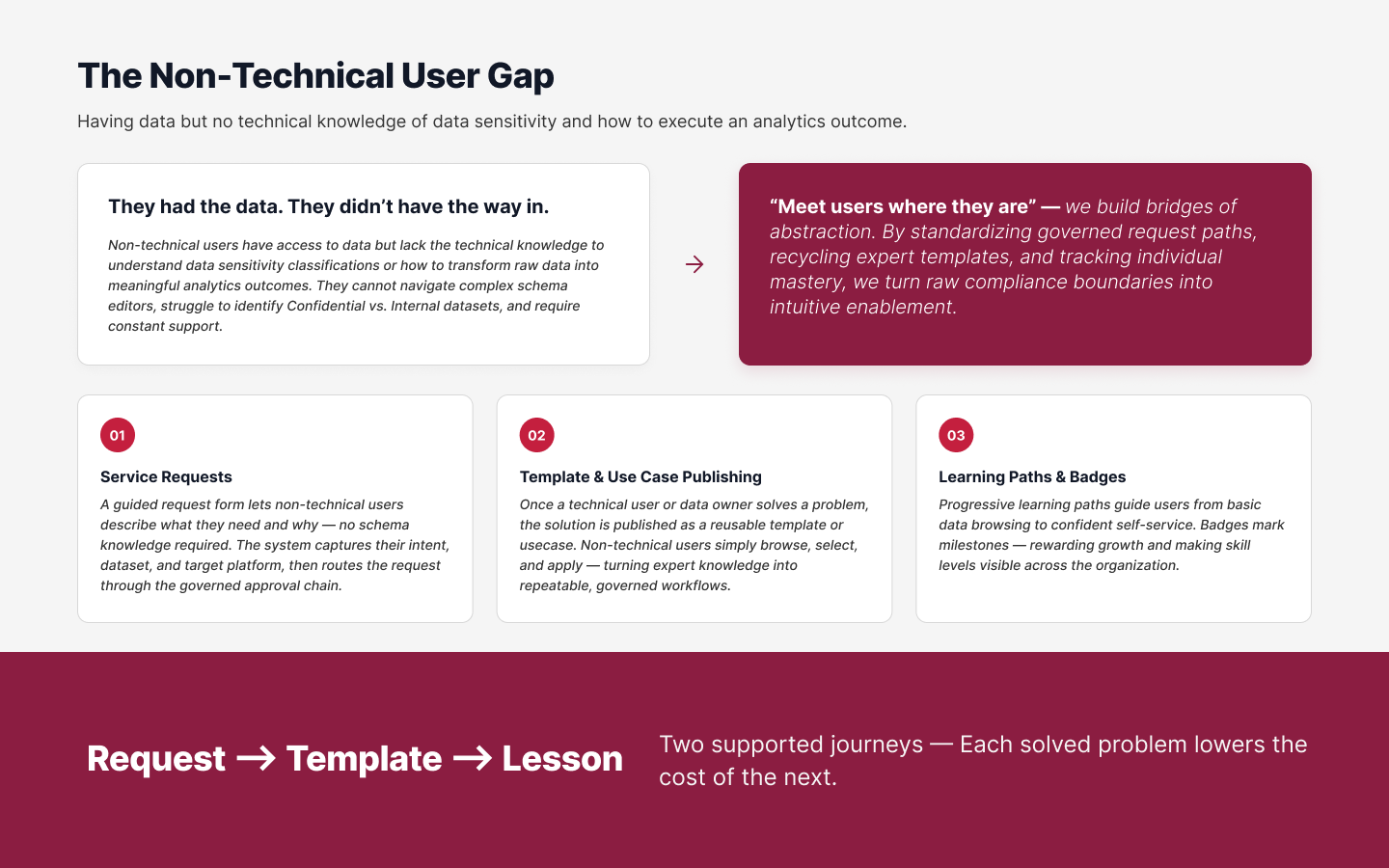
They had the data. They didn't have the way in.

Research insight: the Non-Technical User Gap — service requests, template publishing, and learning paths form a Request to Template to Lesson loop
The Non-Technical User Gap — a Request → Template → Lesson loop

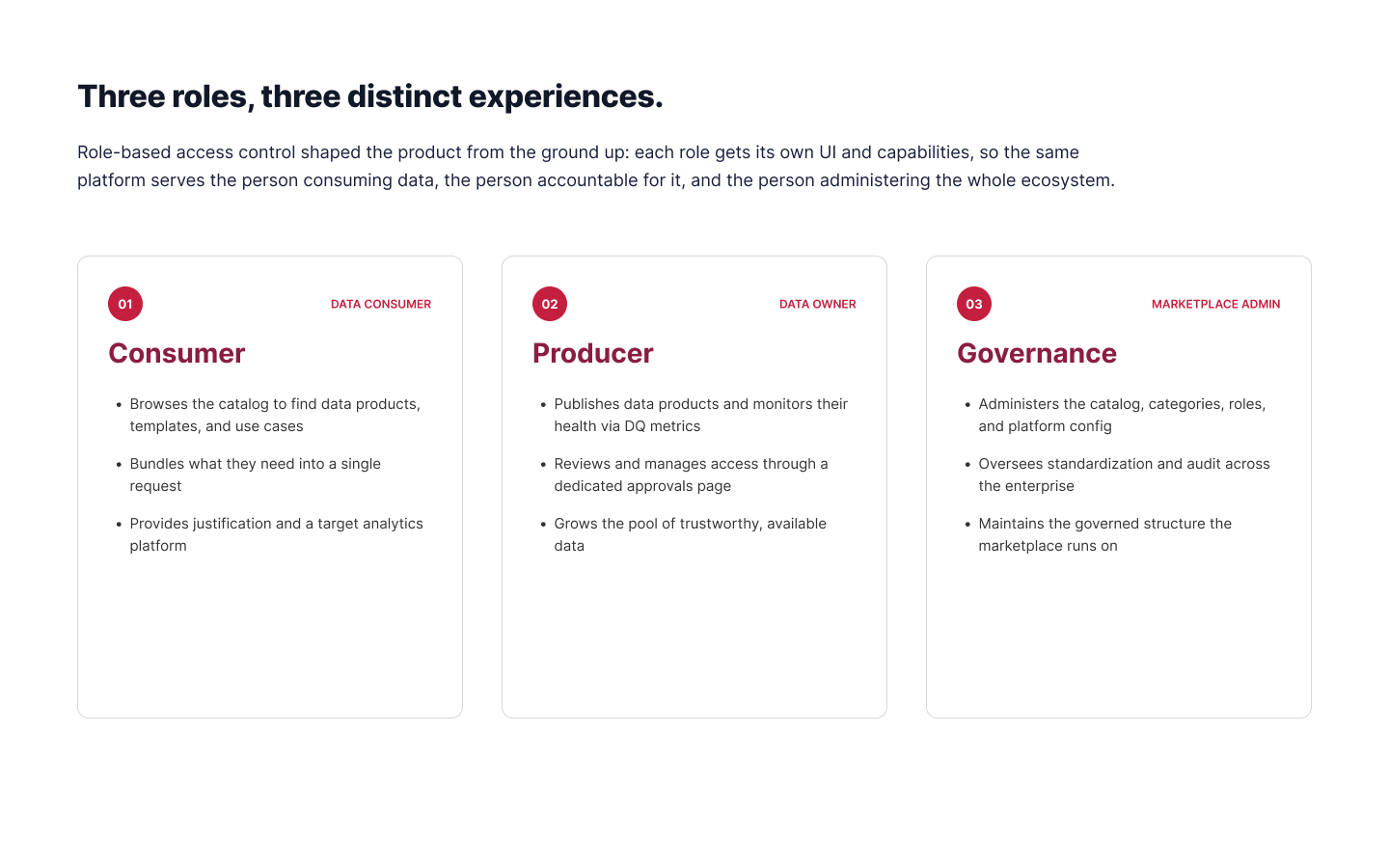
Three roles, three distinct experiences.

Role model: Consumer, Producer, and Governance, each with distinct capabilities across the marketplace
Consumer / Producer / Governance — one platform, three jobs-to-be-done

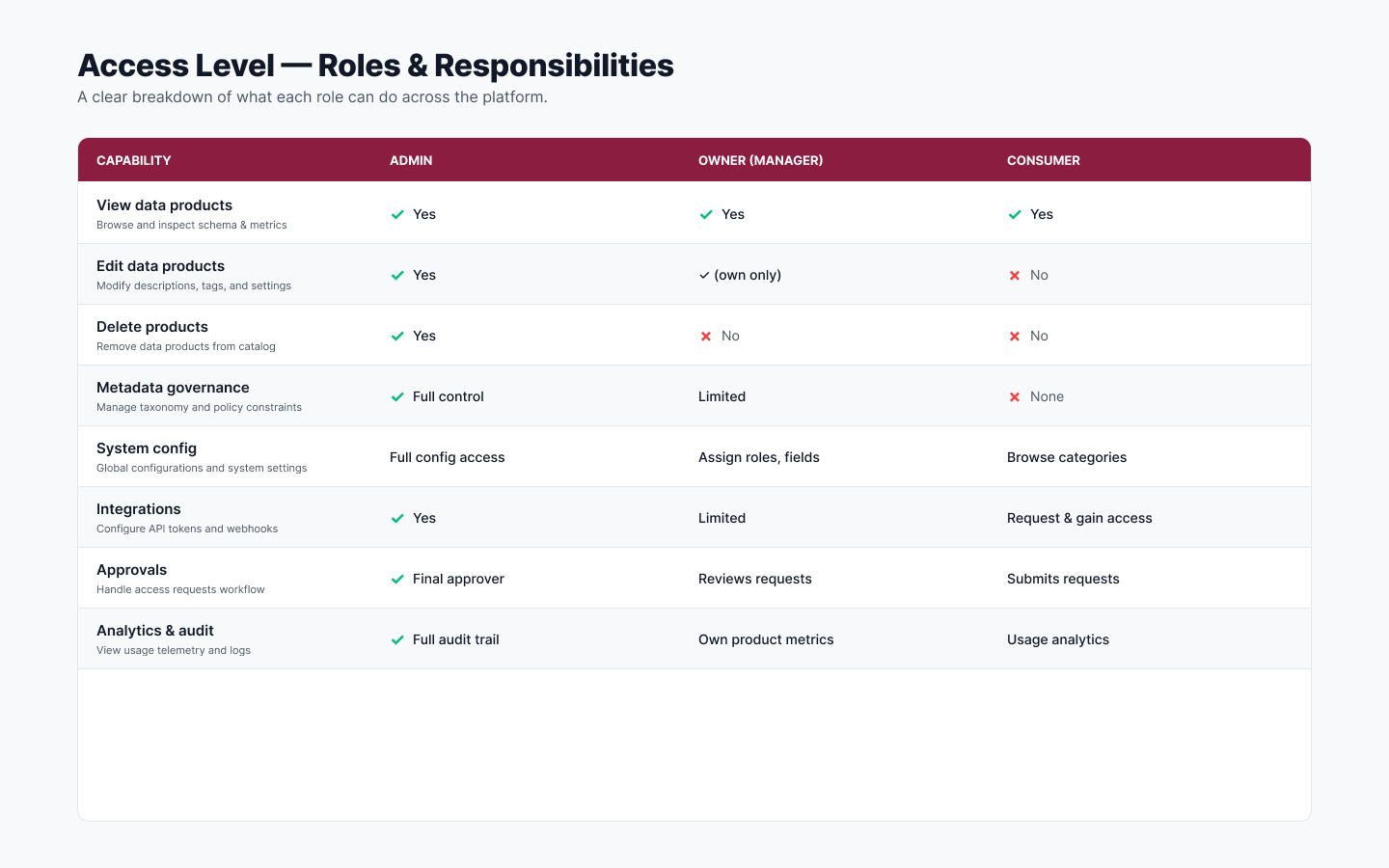
Making “who can do what” unambiguous.

Access-level matrix mapping capabilities across Admin, Owner and Consumer roles
Access Level — the responsibility matrix

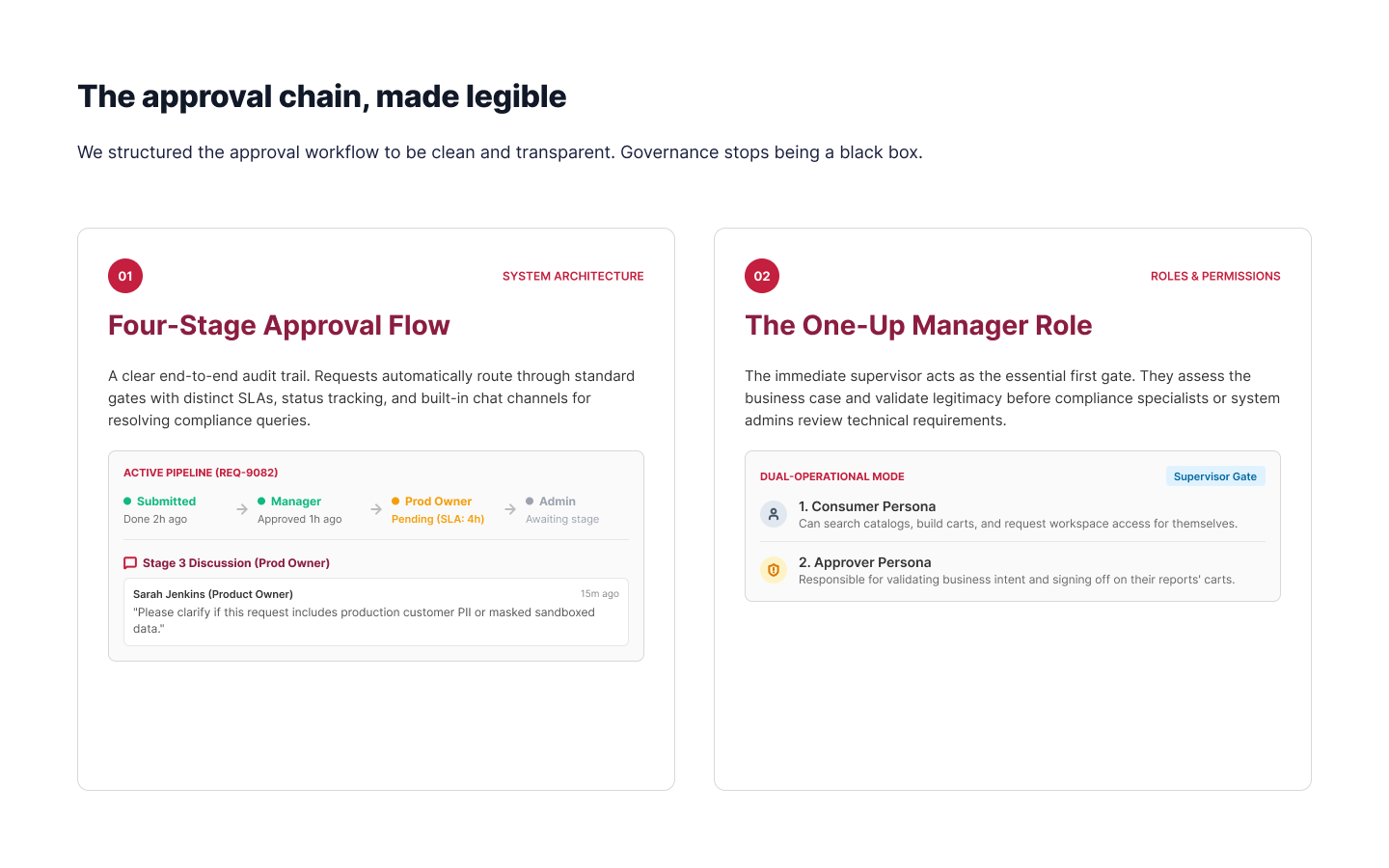
Governance made legible, not a black box.

Approval chain design: a four-stage flow with SLAs, status tracking, inline discussion, and the one-up manager role
The approval chain — four stages, one-up manager first

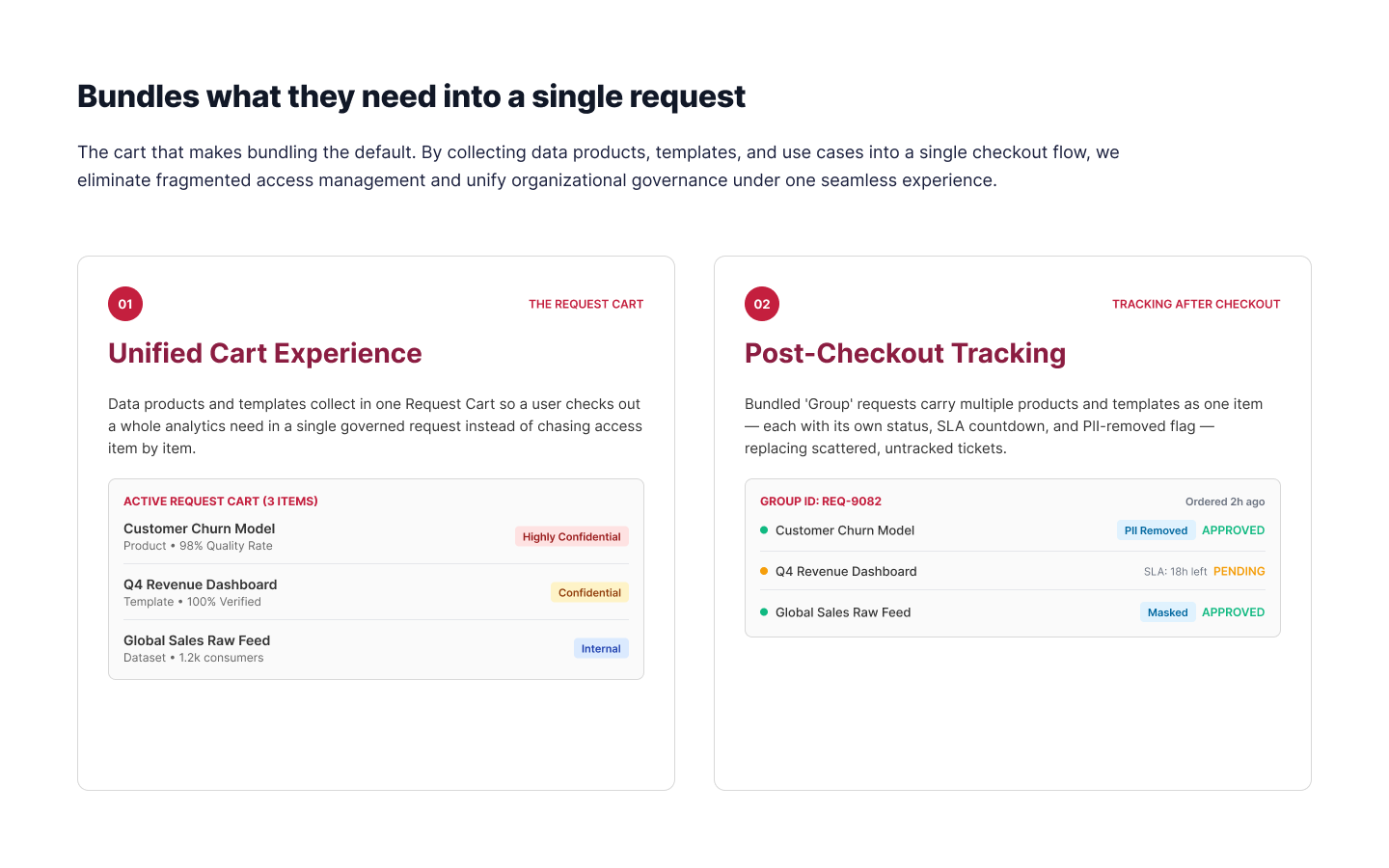
Bundle a whole analytics need into one request.

Request-bundling model: a unified Request Cart and post-checkout tracking of a bundled group request with per-item status, SLA and PII flags
The request cart — bundling by default, tracked after checkout
50%
faster task completion once flows were rebuilt around confidence — lineage, freshness, and owner shown at the moment of the decision, not buried a click away.

What the research changed.

Reframe

Trust over search

Success became “request completed,” not “results returned.”

Speed

50% faster tasks

Confidence signals surfaced at the point of decision.

Access

Non-technical users in

Guided requests, templates, and learning paths gave a real way in.

Governance

Legible, not opaque

A responsibility matrix and visible approval chain removed the guesswork.

What worked

  • Testing the brief before designing surfaced the search-to-trust reframe.
  • One responsibility matrix kept design, governance, and engineering honest.
  • Designing for non-technical users turned compliance into enablement.

What's next

  • Instrument the completed-request metric to keep validating the reframe.
  • Feed learning-path mastery into smarter recommendations.
  • Pressure-test approval SLAs against real volume once live.