Role
Senior UX / Product DesignerEnd-to-end · research → UI
Got Incite is an omni-channel survey platform that helps businesses collect customer feedback anywhere — app, browser, or in-store — and turn happy responses into public social reviews. I designed the product end-to-end, led by competitor analysis and mining real user reviews of the tools it set out to beat.
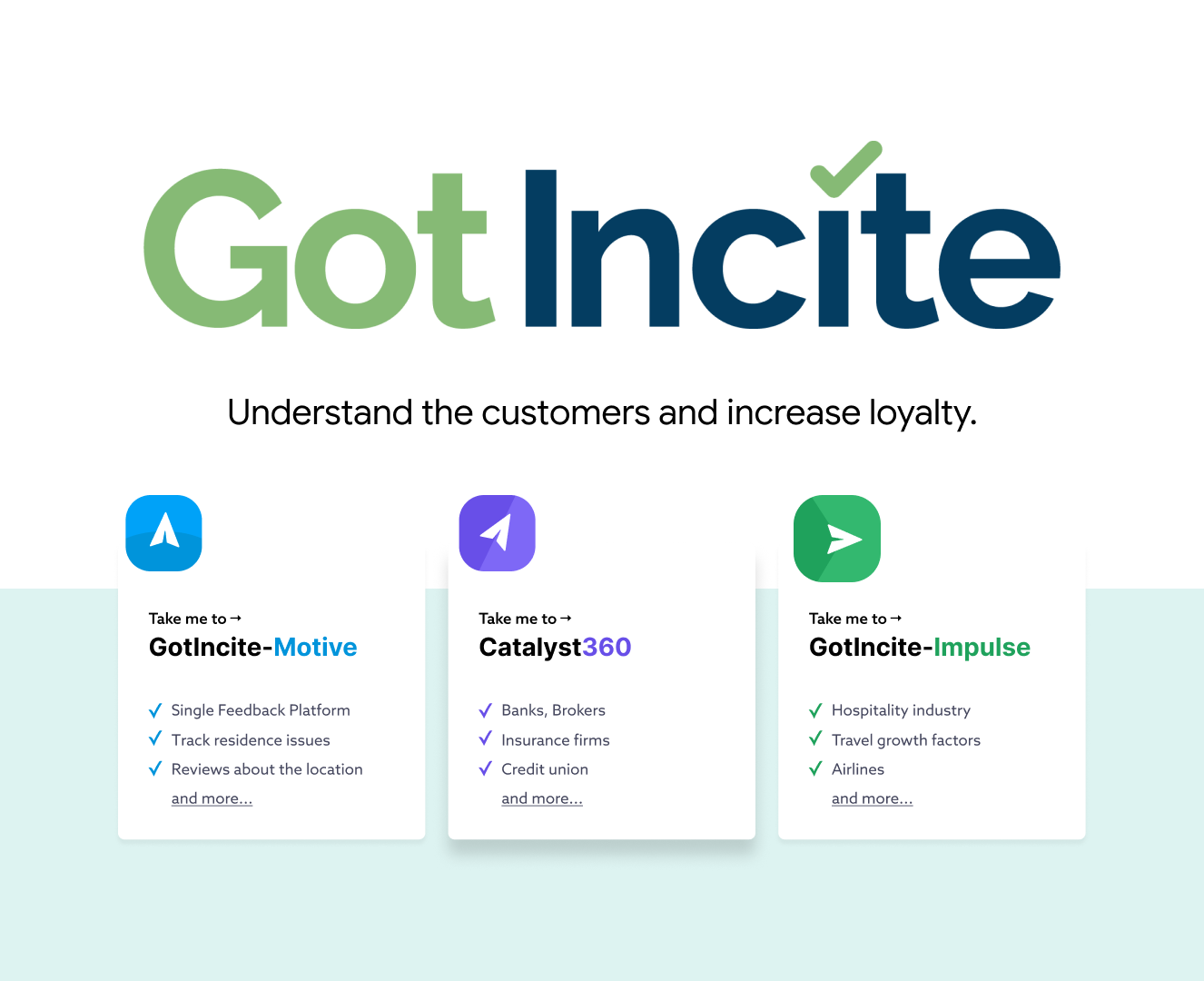
Businesses build surveys, send them across every channel their customers actually use, and read results in one dashboard. What sets Got Incite apart is what happens after a good response: the product nudges satisfied customers to post a public review — so feedback compounds into reputation.
My remit covered the whole experience: the survey builder, the four distribution flows, the embeddable API, and the review loop that ties them together.
Small and mid-sized businesses had no shortage of survey tools. The gap was in what those tools didn't do: they treated a survey as the finish line.
A happy customer filled in a survey — and that goodwill died in a spreadsheet. Nothing turned it into the public reviews that win new customers.
Businesses meet customers on a website, at a counter, or in an app — but tools assumed one channel and left owners chasing responses by hand.
Capable tools were heavy and technical; simple ones couldn't do branching logic. Non-technical teams were stuck choosing between the two.
Meet customers on any channel, stay light enough for non-technical teams, and convert good feedback into public reviews automatically — and the product stops being a survey tool and starts being a growth engine. Every decision below traces back to one of those three ideas.
With no existing customer base to interview, I ran a structured competitor analysis of the two products this tool was measured against — SurveyMonkey and Qualtrics — and read through their public user reviews. The complaints repeated themselves, and each one became a design principle.
Shipped 16 focused question types with built-in logic, surfaced in a simple picker — capability without the clutter.
Designed four distribution modes so a survey meets customers where they already are: email, link, embedded, in-store.
Built a review-boost loop that routes happy respondents to public review sites — the product's core differentiator.
Designed an embeddable API so surveys and results live on the client's own website — no portal round-trip.
Why it mattered: reading competitors' user reviews gave me real, unfiltered pain points before a single screen existed — the fastest way I've found to frame a product around what people actually struggle with when first-party research isn't yet possible.
Teams assemble a survey from a focused set of patterns — rating, NPS, multiple choice, matrix, open text — and wire skip and branching logic without touching code. The heavy capability sits behind a clean single-column canvas so non-technical users stay oriented, with full branding on top.
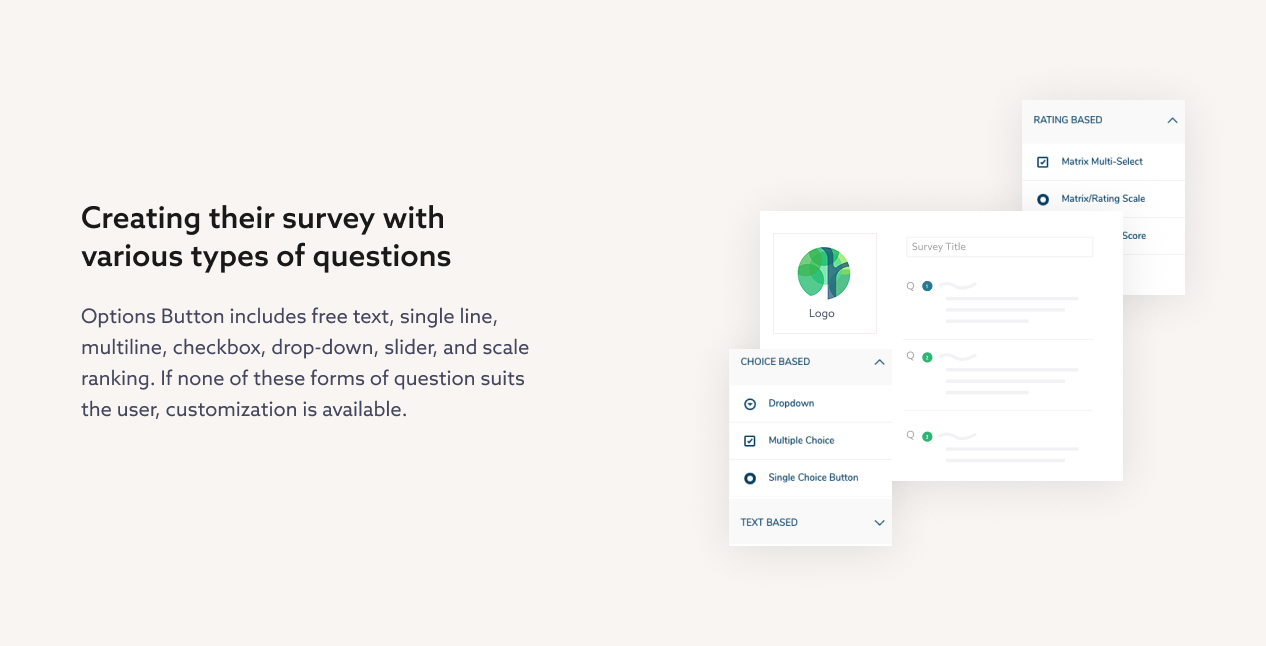
A focused type picker groups choice-, text-, and rating-based questions — including matrix and NPS — with customization available when none of the standard patterns fit.
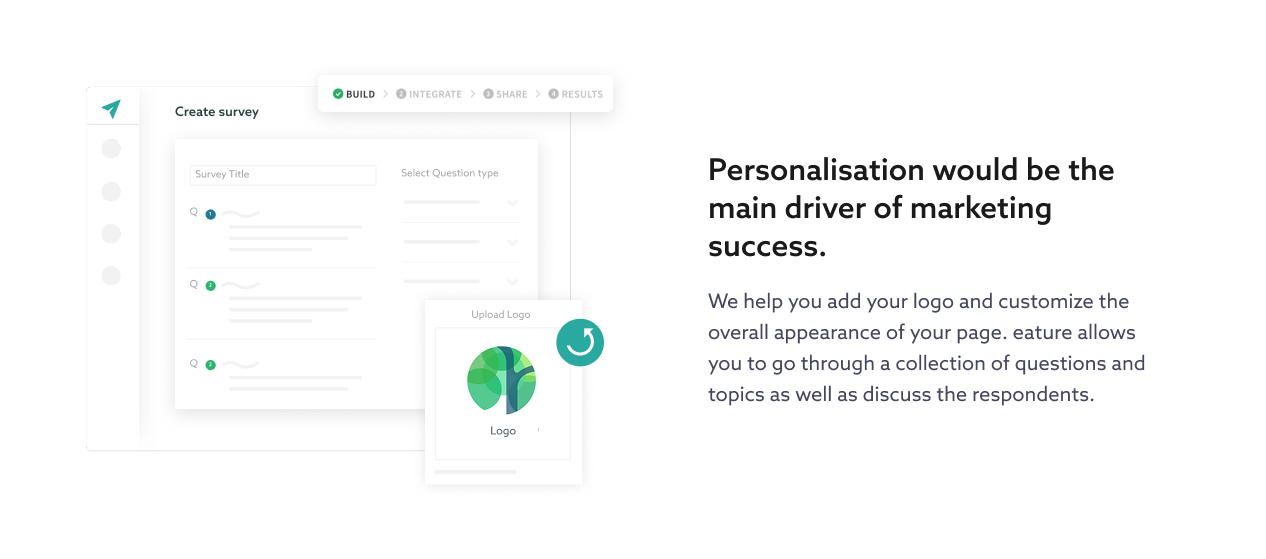
Clients add their logo and tailor the survey’s appearance to their own brand, so the survey reads as the business’s own page rather than a third-party form.
The same survey ships through four modes, so response rates stop depending on dragging people to a portal.
Branded invites with auto-reminders
Shareable for social, SMS, or print
Dropped into the client's site via API
Kiosk and in-app, at the moment
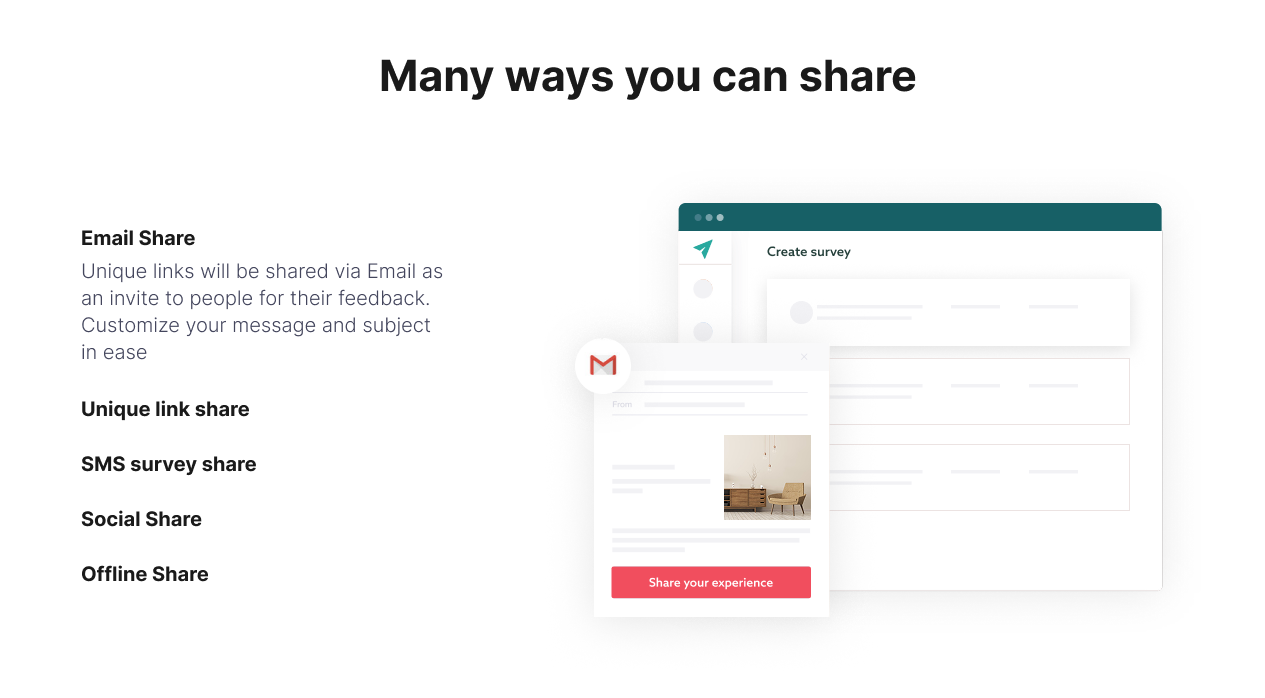
Email, unique link, SMS, social, and offline share all draw from the same survey — each recipient gets a unique link so responses stay attributable.
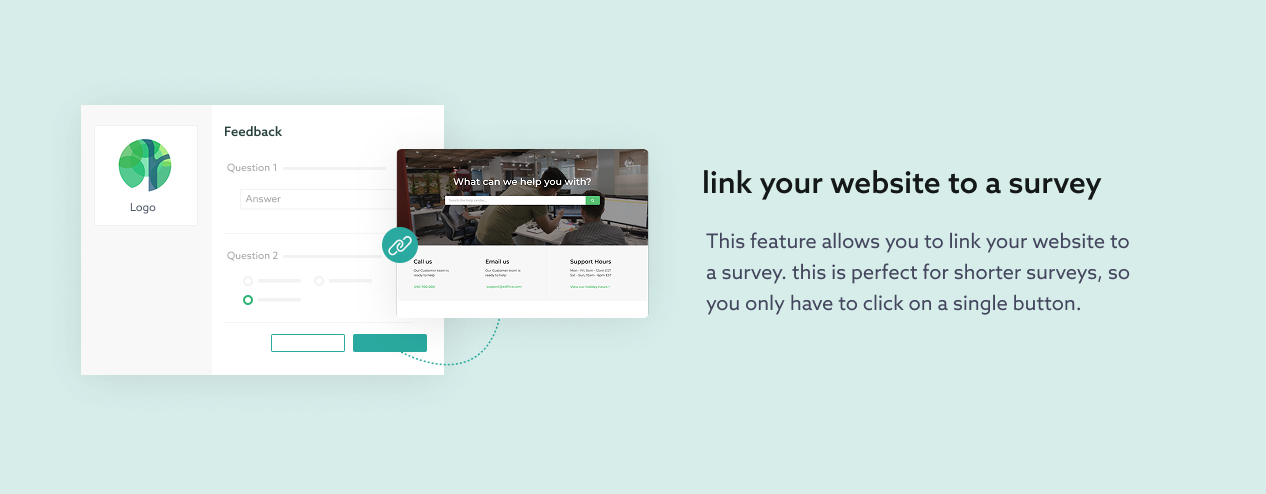
For short surveys, a single button on the client’s own site opens the form — no email, no portal, no extra step between intent and answer.
This is the idea the whole product hangs on. Instead of ending at “thank you”, a positive response becomes the first step of a loop that grows the client's public reputation. Unhappy responses route the other way — privately to the business — so problems get fixed before they become a public one-star review.
Answer captured on any of four channels
Logic reads sentiment from the rating
Happy respondents nudged to public sites
Higher ratings attract the next customer
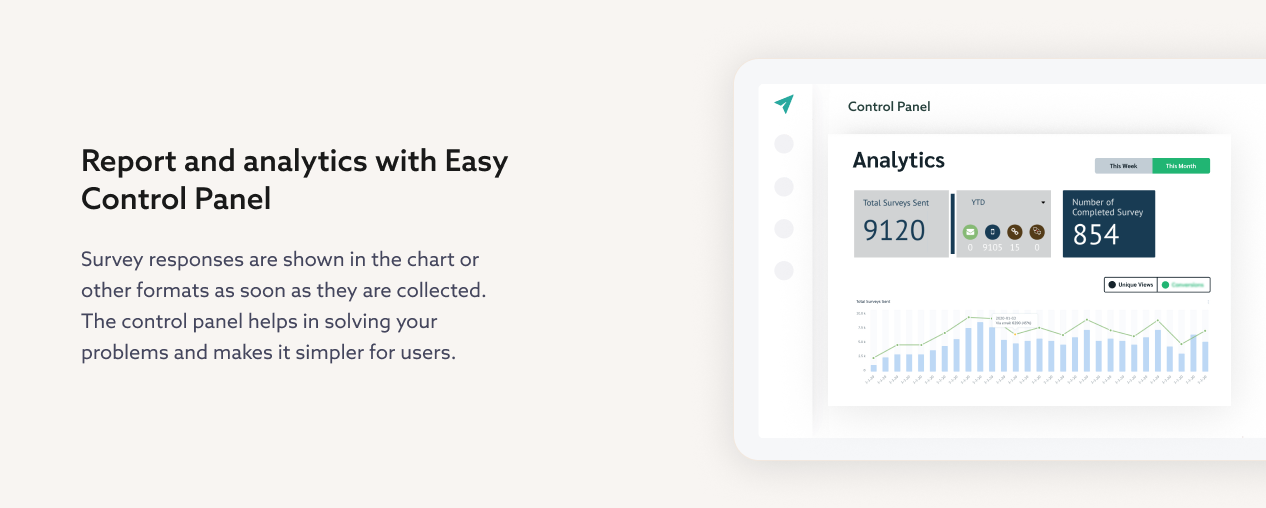
Surveys sent, completions, unique views, and conversion trend sit in one control panel — the loop made visible, so owners see feedback turning into reputation.
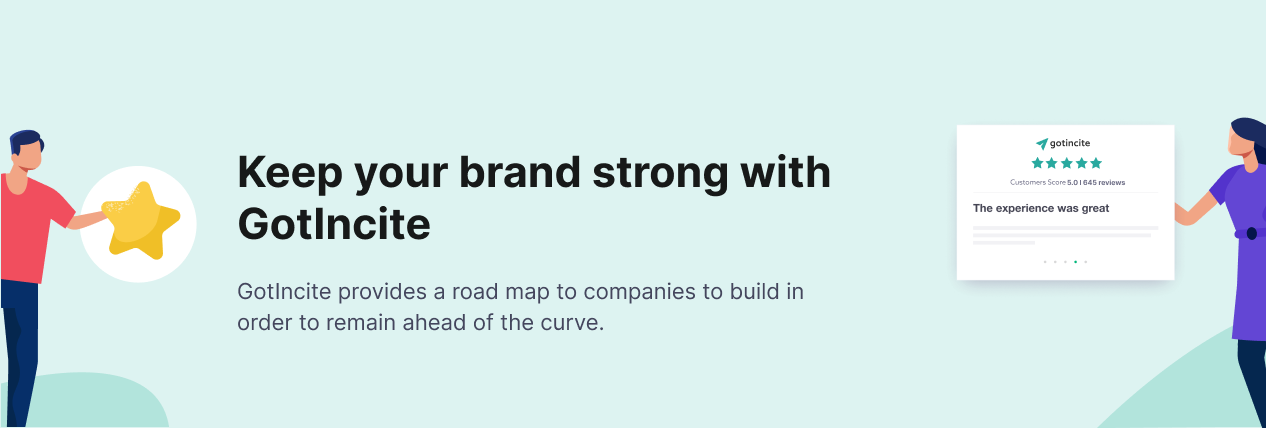
Collected ratings surface as public reviews the business can display — the point where a survey stops being data collection and starts being marketing.
Meeting customers on four channels instead of one portal lifted response volume — the metric every other insight depends on.
Routing happy respondents to public sites turned private goodwill into visible ratings, growing each client's reputation.
The embeddable API let clients run feedback on their own sites, removing the portal round-trip users kept complaining about.
Got Incite has since scaled across industries. Earlier outcomes are directional, observed post-launch.